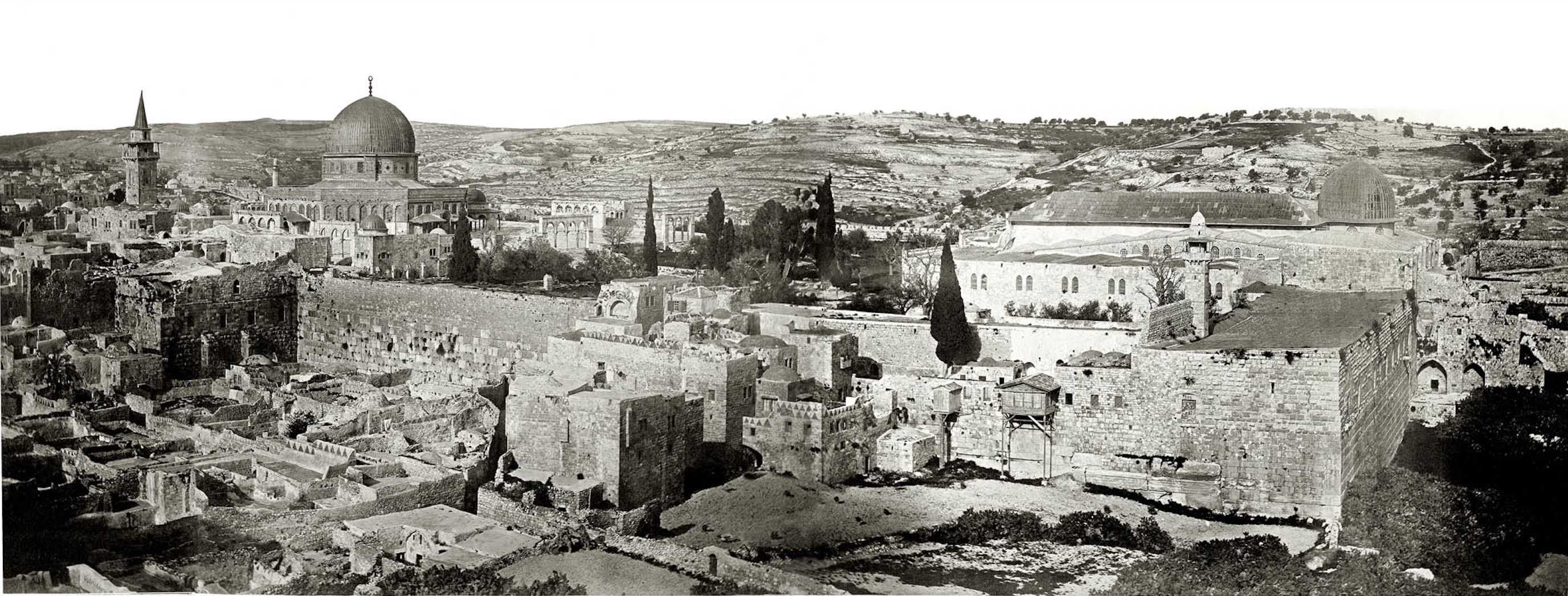
CURTIS HUTT, 26 FEBRUARY 2024
The Status Quo is an evolving set of historical arrangements concerning existing rights at holy places in Israel/Palestine. Their details are notoriously complex as they pertain not only to ownership but also to specific permitted practices. Parties to separate agreements often differ as to their scope and applicability. The definition of “holy places” itself is disputed, and questions arise about which sites should receive Status Quo protections. I argue that new regional and international political efforts to fortify the most critical parts of earlier Status Quo understandings are required, as these agreements, both formal and informal, have largely kept the peace in Jerusalem as well as between Middle Eastern and international powers for centuries.
The Status Quo under the Ottomans and the British Mandate
Today’s Status Quo arrangements are commonly dated to Ottoman Sultan Osman III’s 1757 firman on disputes at five Christian sites. Muslim rulers had guaranteed minority rights for Jews and Christians in Jerusalem since the pre-Crusader period and the Pact of Umar. Osman III’s decree was challenged by Roman Catholics who claimed that their predominance at holy places dating to the Latin Kingdom of Jerusalem (1099-1187) and reaffirmed in a 1740 Capitulation had been usurped by petitioning Eastern Orthodox rivals. Use of the phrase Status Quo itself is dated to Sultan Abdul Mejid’s firman of 1852 that reaffirmed Osman’s – in the face of great pressure from rival Christian powers. This was followed up in 1853 with an additional firman moving adjudication of conflict over the holy places from Jerusalem to the Sublime Porte. Abdul Mejid’s decrees were then adopted at the end of both the Crimean and Russo-Turkish Wars in the Treaties of Paris (1856; Article IX) and Berlin (1878; Article 62). In the latter, Status Quo protections were extended to non-Christian religious holy places as well – an expansion taken up in the League of Nations’ 1922 Mandate for Palestine (Article 13) that sought to practically determine “rights and claims” for multiple religious communities (Article 14).
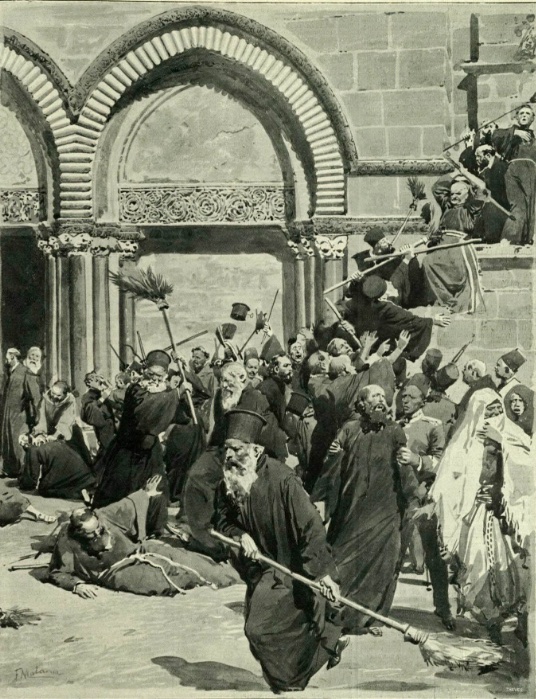
(Drawing of Greek monks and Fransciscan friars fighting in front of the Holy Sepulchre by Fortunino Matonia in L’Illustrazione Italiana 1901/48, Dec. 1)
When no international commission under the Council of the League was formed to oversee this process, British Mandatory authorities took up the task through its 1924 Order-in-Council. This resulted in the work of Archer Cust, Private Secretary to the British High Commissioner for Palestine and Transjordan, whose 1929 work on Status Quo sites became the most well-known compendium on the topic – one that would be largely adopted two decades later by the United Nations. All issues related to an enlarged set of holy places were explicitly not to be ruled upon by local courts in Palestine but to be referred to the British High Commissioner and ad hoc Commissions of Enquiry. This happened on several occasions, perhaps most notably regarding Jewish challenges to the Status Quo at the al-Buraq Wall (aka: Western/Wailing Wall) where it was ruled in a 1931 Order-in-Council that while Jewish worshippers must be given access to the site that it was part of the al-Haram al-Sharif/al-Aqsa complex and thereby its proprietors were Muslim.
From the Establishment of Israel to the 1967 Arab-Israeli War
After the end of the British Mandate and Israel’s Declaration of Establishment in 1948, the United Nations’ attempts – through the actions of a Conciliation Committee and Trusteeship Council – to preserve the Status Quo at holy places in a proposed internationalized Jerusalem Corpus Separatum and throughout Palestine failed. Notably, at this time, adjudication of Status Quo disputes passed back from international to local rulers and judges. Jordanian and Israeli governments came up with their own distinct approaches to the prior Status Quo arrangements with, in my view, less than satisfactory results.
The Hashemite Kingdom, on account of its military control of East Jerusalem and the West Bank, which was formalized in the 1949 Armistice Agreement between Israel and Jordan, became the guarantor of the Status Quo at Muslim and Christian sites even though its actions were not internationally sanctioned, and it was not yet a member State of the United Nations. Rather, they based their custodianship on earlier expressions of loyalty from religious authorities in Jerusalem dated as early as 1917, as outlined in the 2020 Jordanian White Paper. Under the nineteen years of its control of the Jewish Quarter of the Old City, however, the 1949 Status Quo recommendations of the United Nations Conciliation Committee regarding “ancient and modern synagogues” in Jerusalem were unheeded by the Jordanian authorities, and all but one of these were destroyed.
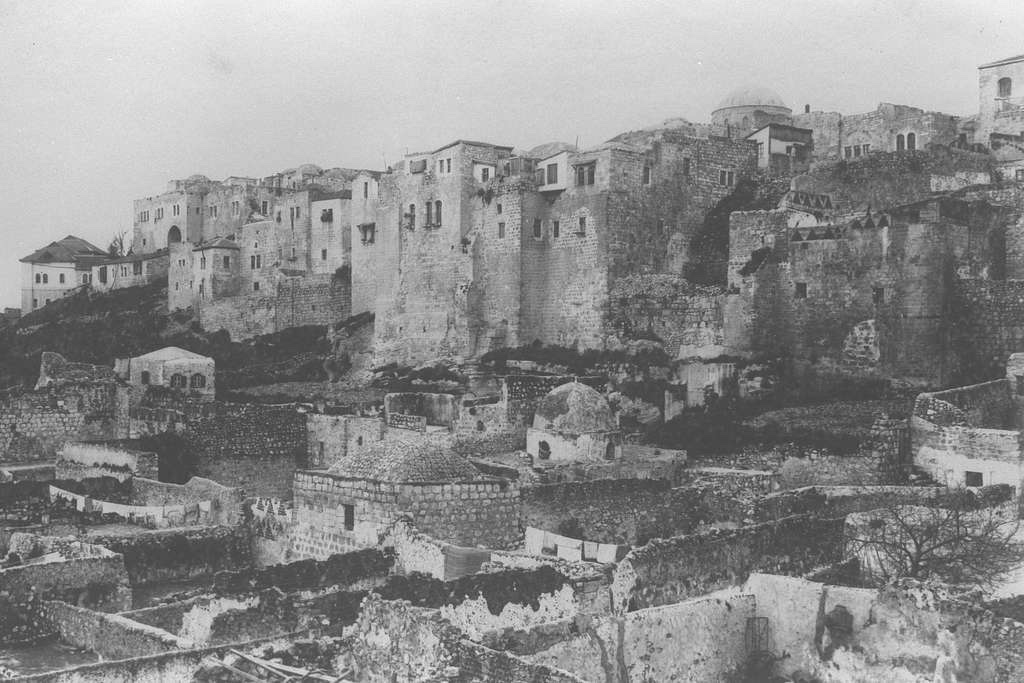
(The View of the Jewish Quarter in the Old City of Jerusalem from the Mughrabi Quarter – Photo: The American Colony, 1910)
In the years immediately following its 1948 Declaration of the Establishment of the State of Israel, Israel – in contrast to its later actions – put forward and supported proposals to not only honor inherited Status Quo arrangements but also to internationalize their adjudication. This is exemplified in the Israeli proposal contained in Abba Eban’s letter to the United Nations Trusteeship Council President (May 9, 1950) as well as in United Nations draft declarations and resolutions backed by Israel, including the Swedish plan for an International Regime for the Jerusalem Area and the Protection of the Holy Places. After 1952, though, Israel largely refrained from issuing additional formal commitments to Status Quo arrangements. This was initially done, ostensibly, because all of the specific holy places under question were under the control of Jordan.
The Status Quo after 1967
Following the 1967 Arab-Israel War, Israeli strategies for interpreting Status Quo agreements became consistently narrower, oftentimes being applied only to limited Christian sites specified in the 1757 and 1852 Ottoman firmans and not to all religious holy places throughout Palestine. Of course, as a backdrop to these developments, the Israeli government in the 1950s and 1960s, led by the Director General at the Ministry of Religious Affairs, officially sanctioned the prodigious registering of scores of Jewish holy places in Israel. This policy supporting the identification and establishment of Jewish religious and cultural heritage sites has, since 1967, also been applied not only in Jerusalem but throughout the West Bank.
The occupation of East Jerusalem and its holy places forced Israel to grapple with the Status Quo arrangements. This was not only because of pressure brought to bear by those seeking to maintain their existing rights but also because of the Fourth Geneva Convention and the 1954 Hague Convention for the Protection of Cultural Property in the Event of Armed Conflict. Choosing to tread carefully, Israel has avoided, when possible, addressing the details of inherited Status Quo arrangements and adopted a policy of strategic ambiguity. While the adjudication of conflicts, as with the Jordanians, returned to the local rulers of Jerusalem, the Israeli executive branch – this time following the example of the British High Commissioner – was charged with ruling on questions of existing rights and historical religious practices. The domestic Israeli courts were empowered to rule regarding violations of a quickly passed Protection of the Holy Places Law: 1967.
Ever since, the Status Quo agreements have been consistently dealt with by the Israeli government in a decidedly piecemeal fashion. For example, the Israeli government led by Moshe Dayan retained some of the inherited Status Quo at the al-Aqsa compound, continuing the Jerusalem waqf‘s administration that dated back to 1187, though taking control of all access to the site. Israel clearly disregarded international agreements related to the al-Buraq/Western Wall at this time. It destroyed the 12th-century Mughrabi Quarter, making way for a large plaza to facilitate Jewish access to and proprietorship of the contested religious site.
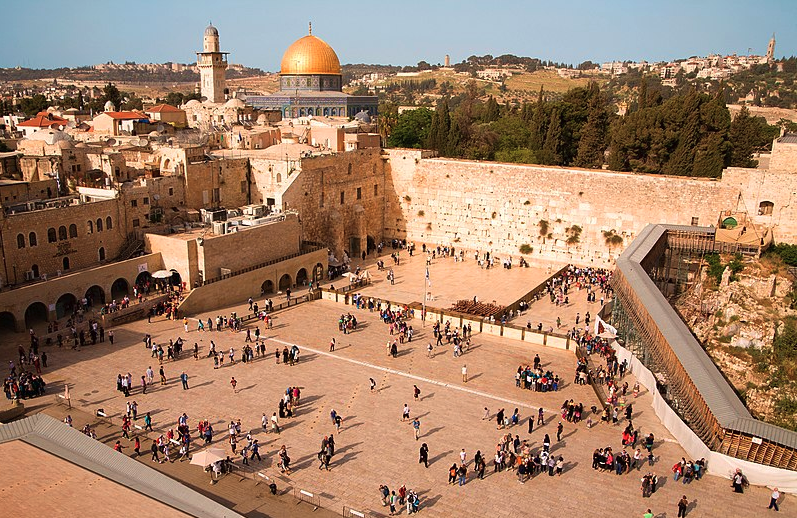
(Western Wall Plaza, 2012 by Wikimedia Commons)
The passing of the 1980 “Basic Law: Jerusalem the Capital of Israel” and its many subsequent amendments asserting Israeli domestic control over all of the city have complicated the situation further. The subsequent international response found in United Nations Resolution 478 was to declare this legislation “null and void.” On the ground in Jerusalem, new modi vivendi became the rule. For example, when it came to the custodianship of Christian holy places, Israel negotiated in 1993 a “Fundamental Agreement” with the Vatican alone which included an affirmation of the Status Quo at Christian holy places even though it has not until this day been ratified by the Knesset.
In Article 9 of the 1994 Israel-Jordan Peace Treaty, Israel formally recognized Status Quo arrangements related to the Hashemite custodianship of Muslim but not Christian sites in Jerusalem – something affirmed to this day by the World Council of Churches. At Rachel’s Tomb, which was cut out of Palestinian Authority-controlled Bethlehem and made part of Israeli Jerusalem in 1996, a familiar appeal has been repeatedly made in defense of Jewish proprietorship to a 1615 Ottoman firman from the Pasha of Jerusalem granting Jews rights to the site. In the Oslo II Accord (1995) and Protocol Concerning the Redeployment in Hebron (1997), both of which were affirmed in the 1998 Wye River Accords, a temporary status agreement was extended to the Ibrahimi Mosque/Cave of Machpelah in Hebron. This included the establishment of a second Temporary International Presence in Hebron (TIPH) – in the wake of a first that had been agreed upon in the aftermath of the 1994 massacre of Muslim worshippers by the follower of Rabbi Meir Kahane, Baruch Goldstein.
The Current Challenges
While the precise content, applications, and success of the Status Quo arrangements have varied over the past few centuries and decades, today, they face burgeoning ethno/religious nationalist threats. For many, these are embodied in the 2018 “Basic Law: Israel as the Nation-State of the Jewish People” passed in Prime Minister Benjamin Netanyahu’s fourth term, which many fear grants preeminence to Jews but also Jewish religious and cultural heritage. Presently, extremist coalition partners in Netanyahu’s fifth government, like the National Security Minister Itamar Ben-Gvir, have intentionally attempted to destabilize Status Quo arrangements at the most explosive of holy places. Upon assuming his position, Ben-Gvir toured the al-Aqsa compound, declaring that “times have changed.” Repeatedly, he has emphasized that the situation was being transformed “slowly and quietly” at al-Aqsa or what Jews call the Temple Mount as well as in East Jerusalem. Presently, his moves to limit access for Israeli-Arab worshippers during Ramadan create the conditions for heightened conflict. Ben-Gvir is not alone in working towards altering the Status Quo at this sacred site that is a tinderbox capable of igniting conflict not only in Jerusalem but across the Middle East and beyond. Almost a decade ago, the present Israeli Ambassador to the United Kingdom, Tzipi Hotovely, declared as Deputy Foreign Minister that it was her “dream to see the Israeli flag flying on the Temple Mount.”
Unfortunately, the grave situation at al-Aqsa overshadows crises at other sacred sites, especially in East Jerusalem and on the West Bank where Ben-Gvir is in charge of Israeli security. Threats to the numerous, if not always well-defined holy places – 326 of them in Jerusalem alone – oftentimes come to the forefront along with cultural heritage and human rights issues. There are many flashpoints these days – from the Armenian Quarter in the Old City of Jerusalem to the Ibrahimi Mosque/Cave of Machpelah in Hebron, from Joseph’s Tomb just outside Nablus to Stella Maris in Haifa, Israel.
Is the Status Quo Outdated?
In the new 2023 book by the acclaimed legal experts on Jerusalem and the Israeli-Palestinian Conflict, Marshall Breger and Leonard Hammer, a bleak forecast is issued for Status Quo arrangements and the holy places they are designed to protect. In many cases, they have already been contravened, and there is no hope that the clock will be turned back in places like the al-Buraq Wall/Western Wall and Rachel’s Tomb. Breger and Hammer, to their great credit, advocate for pragmatic strategies for keeping the peace in the present. These include many detailed suggestions that I agree with, including a call for the establishment of “a special regime using an outside third party that incorporates the interests of all religious groups ….. managing, if not resolving conflicts surrounding the holy places” (p. 183).
Where I differ with them is in regard to the deteriorating Status Quo formal agreements. They must be reinforced and not sidestepped. Breger and Hammer argue that today informal arrangements on the most basic of issues like access and administrative autonomy can accomplish more than negotiated codification of existing rights as dissenting parties will never acquiesce publicly to any compromise, and such attempts are doomed to failure. This argument follows the same failed logic of the 1993 Israeli-Palestinian Declaration of Principles that postponed final status negotiations over Jerusalem until the end of the diplomatic process. I propose the opposite. Mediation should build upon and leverage widespread agreement amongst international bodies and local religious authorities about protecting inherited rights at the holy places. Once a formal agreement on the most combustible religious disputes is reached, perhaps other difficult political issues can be more easily resolved.
Towards a Refortified Status Quo
I think that the situation on the ground in Israel/Palestine has dramatically changed since the publishing of Breger and Hammer’s book – on account of the Oct. 7 attacks and the Israel-Hamas war. With developments in Ayodhya also clearly in view, we witness incredibly volatile situations in the Old City of Jerusalem. Israeli government ministers lead the charge to undermine longstanding Status Quo arrangements. While Roger Friedland and Richard Hecht’s work comparing religious violence in Israel and India is foreboding, I would suggest that Jerusalem is not Ayodhya. The destroyed Babri Masjid never held the central position of al–Aqsa in global Islam. And a couple of billion Muslims around the world are joined by even more Christians in their concern over what happens at the holy places in Jerusalem.
It is not sufficient for political actors to merely provide lip service to some amorphous Status Quo if they are unwilling to publicly define exactly what this means. Knowing where the red lines are and not transgressing them builds trust among all parties. Without formalized Status Quo arrangements and effective adjudication, dangerous upheavals fed by the emergence of unhelpful “facts on the ground” are more likely. The involvement of third parties and international bodies in negotiating, signing off on, and adjudicating newly updated and reaffirmed Status Quo agreements – as we have seen in the history of their development – is critical in times of crisis. Israel, at the birth of the State when minority Jewish religious practices in East Jerusalem were threatened, was in favor of the internationalization of the oversight of holy places. This brings us to a much-overlooked advantage of past Status Quo arrangements. They have not only protected religious sites and ancient practices but the traditions of threatened minorities as well.
In the 1757 firman on the disposition of sacred sites in Jerusalem, no mention was made of protecting the al-Aqsa compound. There was no need. Rather, the decree exclusively addressed disputes at the holy places of a religious minority. Over time, especially at critical political junctures, Status Quo arrangements came to include sites deemed sacred by Jews and Muslims – especially when their existing rights were endangered. While Roman Catholics did not originally support the firman advanced by Sultan Osman III, charges of “usurpation” of rights by other Christians at holy places have been dropped. Today ancient rival churches have banded together in response to perceived Israeli threats to the Status Quo – and they have joined with Muslims as well. With the informal Status Quo arrangements at al-Aqsa and elsewhere widely perceived to be under growing threat, appealing to the international and local political actors to formalize and affirm their commitments is the least that can be done. The principle of protecting the Status Quo at critical holy places in Israel/Palestine has for centuries been a proven way to preserve the peace. The need to defend al-Aqsa or any other holy places through military means needs to be taken off the table. A refortified Status Quo is a good place to begin.

Curtis Hutt is a professor of religious studies at the University of Nebraska at Omaha. He is the Founding Executive Director of the Goldstein Center for Human Rights (2017-2023) and former Director of Programming at the Schwalb Center for Israel and Jewish Studies. Curtis has published four books and over a dozen academic articles, mostly concerning religion and the representation of the past. A longtime focus of his work is Jerusalem studies.
Cover Photo: From "Views of Jerusalem," Sgt. James McDonald, 1864 Ordnance Survey.
The publication of this essay is supported by the Goldstein Family Community Chair in Human Rights at the University of Nebraska at Omaha. The views and opinions expressed in the articles on this website are those of the authors and do not necessarily reflect the official policy or position of the University of Nebraska at Omaha.
 Siyasa